New Australian Coupon Study Finds Only 55% of Codes Worked as Advertised
Australian shoppers regularly turn to coupon codes to reduce the price of fashion, travel, technology, beauty and homeware purchases.
However, a new analysis from Working Coupons suggests that finding a code does not necessarily mean the advertised discount will appear at checkout.
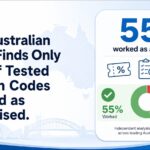
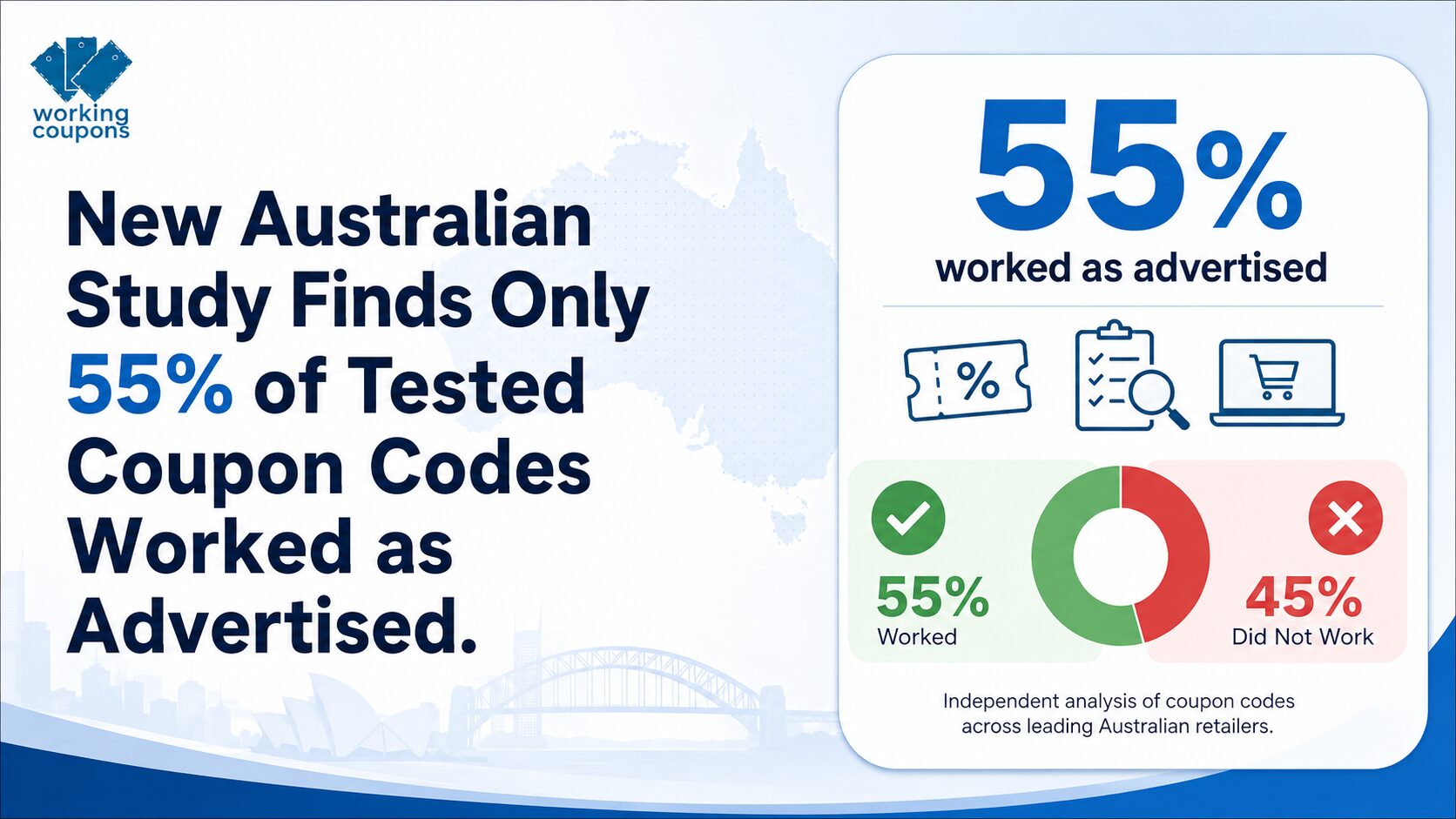
Working Coupons tested 250 publicly advertised coupon codes from 96 Australian and international retailers. According to the study, only 54.8% worked exactly as advertised.
A further 19.2% produced a discount only after additional conditions were met, while 21.2% failed or did not provide the expected saving. The remaining 4.8% could not be conclusively tested.
You can view the full Australian coupon code study on Working Coupons.
Contents
- More Than One in Five Coupon Codes Failed
- Some Codes Worked Only After the Cart Was Changed
- A 20% Coupon Produced a 2.4% Cart-Wide Saving
- Loyalty Rewards Can Also Affect Coupon Value
- Beauty and Technology Codes Performed Best
- What to Check Before Using a Coupon Code
- How Working Coupons Tests Offers
- An Australian Coupon Platform
- The Bottom Line
More Than One in Five Coupon Codes Failed
Of the 250 codes included in the analysis, 53 failed or did not deliver the advertised saving.
The most common problem involved codes that appeared to be expired or inactive despite remaining publicly listed. These accounted for 21 of the failed tests.
Product and brand exclusions affected another 14 codes, while eight were linked to unclear minimum-spend requirements.
Five codes were limited by new-customer or account conditions, and another five produced technical or unexplained checkout errors.
In several cases, the retailer displayed only a generic message saying the code was invalid. This made it difficult to determine whether the offer had expired or whether the shopper’s cart simply did not qualify.
Some Codes Worked Only After the Cart Was Changed
Working Coupons classified 48 codes as restricted successes.
These codes produced a discount, but only after the shopping cart or customer conditions were changed.
Common restrictions included:
- Minimum spending requirements
- Excluded sale products
- Selected-brand limitations
- New-customer conditions
- App-only eligibility
- Account login requirements
- Loyalty reward conflicts
- Maximum discount caps
These restrictions are not always immediately visible alongside the headline offer.
A code may be described as offering 20% off, for example, while applying only to selected full-price products or requiring a much higher minimum spend than expected.
A 20% Coupon Produced a 2.4% Cart-Wide Saving
One of the examples included in the study involved a coupon advertised as offering 20% off.
The code was entered into a $286 shopping cart but applied to only $34 worth of products. The remaining items were excluded because of brand restrictions.
The resulting discount was $6.80, which represented only 2.4% of the full cart value.
The code technically worked, but the final saving was substantially lower than the headline percentage suggested.
This is one reason shoppers should check the final checkout amount rather than relying only on the advertised discount.
Loyalty Rewards Can Also Affect Coupon Value
Another test involved a 15% coupon that could not be combined with an existing $10 loyalty reward.
Removing the loyalty reward allowed the coupon to work, but the final discount improved by only $2.75.
This shows why the largest advertised percentage is not always the most valuable option.
A smaller discount that applies to an entire cart may provide a better result than a larger offer with exclusions, caps or stacking restrictions.
Beauty and Technology Codes Performed Best
Coupon success rates varied between shopping categories.
Beauty recorded the highest confirmed success rate, with 62.9% of tested codes working as advertised.
Fashion and technology both recorded confirmed success rates of 60%.
Travel produced the lowest confirmed result, with 45% of tested codes working as advertised.
The category results were:
- Beauty: 62.9%
- Fashion: 60%
- Technology: 60%
- Home and furniture: 50%
- Online services: 48.6%
- Travel: 45%
Travel promotions were more likely to depend on selected dates, participating properties, minimum booking values, app use or membership requirements.
Taxes, cleaning charges, booking fees and service charges may also be excluded from an advertised percentage discount.
What to Check Before Using a Coupon Code
Before relying on a promotional code, check whether the terms include:
- A minimum spend
- Selected-brand exclusions
- Sale-product exclusions
- New-customer conditions
- An app or account requirement
- A maximum discount cap
- Restrictions on combining offers
- Delivery or service fees
- Geographic limitations
It is also worth comparing the coupon against any automatic sale, loyalty reward or free-delivery promotion already applied to the order.
The best offer is the one that produces the lowest final checkout price, not necessarily the one with the largest percentage in the headline.
How Working Coupons Tests Offers
Working Coupons says it records the advertised terms before entering each code into an apparently eligible shopping cart.
A code is classified as working as advertised when it produces a visible discount consistent with the promotional claim and stated conditions.
Codes are recorded separately when they work only after additional conditions are met, fail at checkout or cannot be tested conclusively.
No purchases were completed as part of the study.
More information about the process is available in the Working Coupons verification methodology.
An Australian Coupon Platform
Working Coupons is a sister site of Frugal Feeds, and launched as an Australian coupon and online shopping website covering retailers across fashion, travel, technology, beauty, homewares and online services.
The site publishes coupon pages, promotional terms and checkout investigations designed to show whether advertised offers provide the expected saving.
It also separates coupon codes from automatic sales and general retailer promotions, helping shoppers understand whether a code is actually required.
You can browse the latest offers and retailer pages at Working Coupons.
The Bottom Line
The study suggests that coupon codes remain capable of delivering genuine savings, but shoppers should not assume every publicly listed offer will work as described.
Only 54.8% of the tested codes produced the expected discount without additional conditions.
Checking the minimum spend, exclusions, eligibility rules and final checkout amount can help you avoid relying on an offer that is expired, restricted or less valuable than it first appears.