
Card Surcharges End at Australian Restaurants From October 1: What You Need to Know
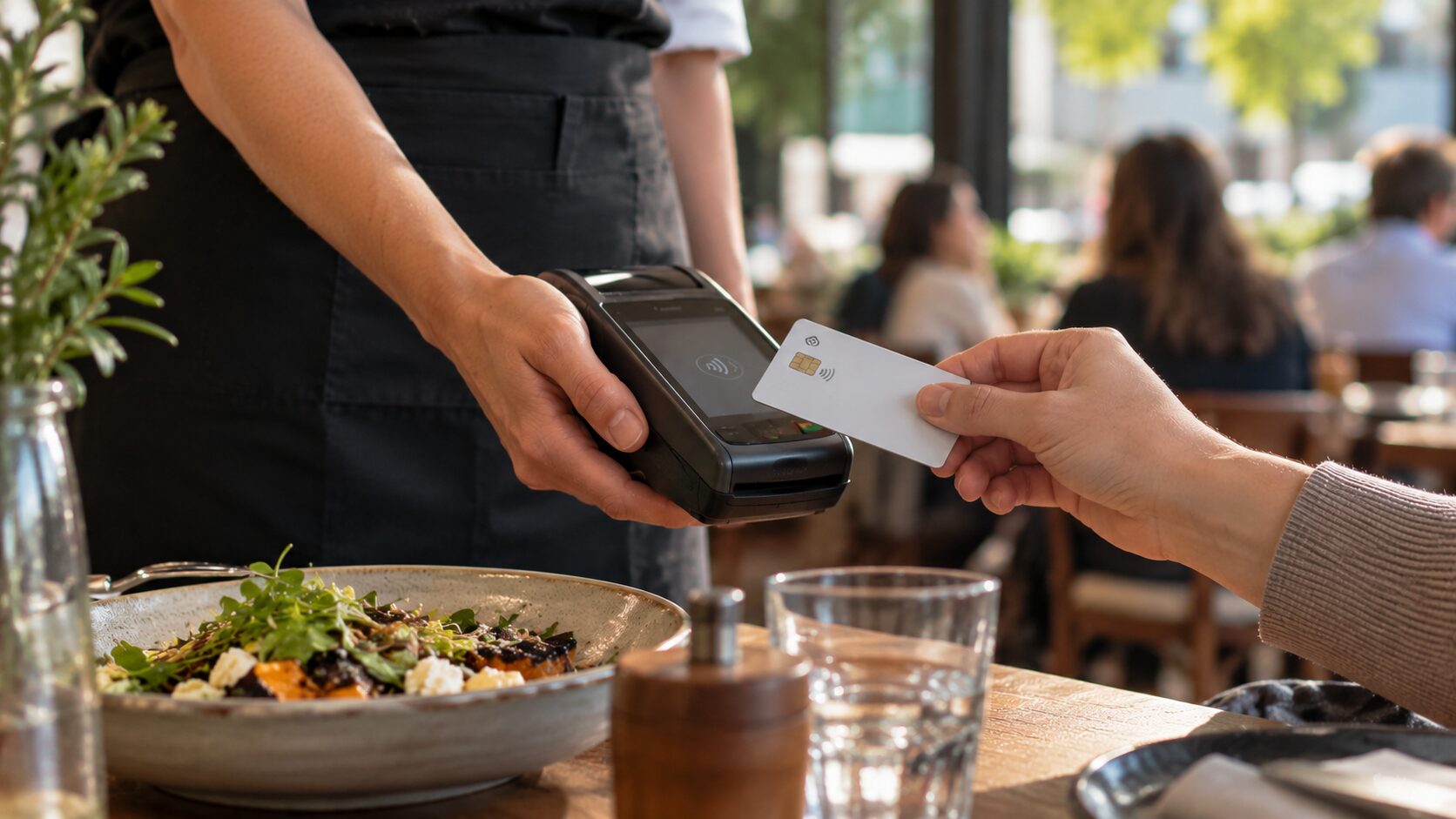
From October 1, the Visa, Mastercard, eftpos and American Express networks will introduce no-surcharge rules, meaning businesses accepting eligible credit, debit and prepaid cards through those networks can no longer add a separate fee simply because you choose to pay by card.
The change could be particularly noticeable when you’re buying takeaway, coffee or other relatively inexpensive food, where percentage-based card surcharges have often added a few cents to every transaction.
Contents
Visa, Mastercard, eftpos and Amex Surcharges End October 1
Until September 30, 2026, Australian businesses can generally continue charging a card surcharge as long as it does not exceed their cost of accepting that particular payment method.
That changes from October 1. Visa, Mastercard and eftpos have each decided to introduce rules preventing merchants from adding surcharges to payments made using their prepaid, debit and credit cards. American Express has separately decided to remove card surcharging from the same date.
For a simple restaurant example, if a takeaway shop displays a meal at $15, it will no longer be able to turn that into $15.15 or $15.23 purely because you tapped an affected card.
The Australian Competition and Consumer Commission gives a similar example in its updated guidance, stating that a convenience store selling a drink for $4.95 would charge $4.95 regardless of whether the customer pays by cash, debit card or credit card once the new arrangements apply.
The Reserve Bank estimates Australian consumers have been paying about $1.6 billion per year in card surcharges.
Weekend and Public Holiday Surcharges Aren’t Going Away
The October change is specifically about fees charged because you pay by card.
Restaurants, cafes and takeaway businesses can still impose other legitimate charges, including weekend surcharges, public holiday surcharges, booking fees and service fees, provided they comply with normal Australian Consumer Law pricing requirements.
That means you could still walk into a cafe on a Sunday and see a 10% weekend surcharge. What should disappear is an additional card-processing percentage being added on top simply because you use an affected Visa, Mastercard, eftpos or American Express card.
Delivery fees are also unaffected. Food-delivery platforms and restaurants can continue charging delivery or service fees where applicable because these are not card-payment surcharges.
Businesses can also incorporate their operating and payment-processing costs into their advertised prices. The change does not require restaurants to absorb every merchant fee without adjusting menu prices.
In practical terms, some businesses may eventually increase their advertised prices slightly rather than continuing to display a lower price and adding a surcharge at checkout. That is a possible business response rather than a requirement of the new rules.
The Change Is Being Introduced Through Card Network Rules
Although the change is commonly described as Australia’s card surcharge ban, there is an important technical distinction.
The Reserve Bank has removed its previous prohibition on card networks imposing their own “no surcharge” rules. Visa, Mastercard and eftpos have subsequently decided to introduce those rules from October 1, with merchants required to comply through their payment-network and merchant-service agreements.
The ACCC says the card networks and payment service providers, rather than the ACCC itself, will be responsible for enforcing the new network rules. The ACCC will continue overseeing Australian Consumer Law issues such as misleading prices and how businesses display unavoidable charges.
Many payment providers are also changing their systems automatically. Westpac, for example, says it is disabling surcharge functionality on its standalone terminals and online payment gateways ahead of the October 1 change.
So if you regularly see an automatic 1%, 1.5% or similar card surcharge appear on a restaurant EFTPOS terminal, that functionality may simply disappear from October.
Some Other Payment Methods Have Different Dates
The October 1 changes cover the major card networks used by Australian consumers, but not every possible payment method operates under exactly the same arrangements.
The Reserve Bank says UnionPay has also decided to remove surcharging from October 1, while PayPal’s no-surcharge rule is scheduled to take effect from October 5, 2026.
Other types of payment fees are not automatically covered simply because the card surcharge rules are changing.
Businesses are also still free to decide which payment methods they accept, subject to other applicable laws and contractual requirements. For example, a restaurant could choose to encourage cash or another payment method rather than recovering card costs through a separate surcharge.
What It Means When You Buy Fast Food or Takeaway
For most customers, the change should make the price shown on a menu or ordering screen more closely resemble the price ultimately charged when paying by card.
From October 1, 2026, separate surcharges for eligible Visa, Mastercard, eftpos and American Express credit, debit and prepaid card payments should disappear at affected Australian businesses.
You can still encounter weekend surcharges, public holiday surcharges, delivery fees and genuine service or booking fees, so the change does not mean every extra hospitality charge is being abolished.
The biggest difference is at the payment stage. If your $12 takeaway order previously became $12.18 after you tapped your card, that separate card surcharge should no longer be added from October 1 when the payment is made through one of the affected networks.
For Australians who regularly pay by card for coffee, takeaway and fast food, it is a small change on each individual order but potentially a significant saving across a year.
For more food news, deals and reviews in general, visit our home page or like us on Facebook! Have any thoughts about this new Hungry Jack’s item? Let us know in the comments.